In PERSIST-2, VONJO was generally well tolerated1,2
Image

Most common adverse reactions1
The most common adverse reactions in ≥20% of patients (n=106) were diarrhea, thrombocytopenia, nausea, anemia, and peripheral edema.
Image

Drug interruptions1
The most frequent reasons for drug interruption in ≥2% of patients receiving VONJO (200 mg BID) were anemia (5%), thrombocytopenia (4%), diarrhea (3%), nausea (3%), cardiac failure (3%), neutropenia (2%), and pneumonia (2%).
Image

Drug discontinuation1
Among patients on VONJO, 15% discontinued treatment due to an adverse reaction, with the most frequent reasons being anemia (3%) and thrombocytopenia (2%).
Image

Dosage reductions1
Adverse reactions requiring dosage reduction in ≥2% of patients who received VONJO (200 mg BID) included thrombocytopenia (2%), neutropenia (2%), conjunctival hemorrhage (2%), and epistaxis (2%).
Important Baseline Hematologic Characteristics to Consider1
HEMATOLOGIC PARAMETERS
Median baseline platelet count (plt): 55 x 109/L
- 45% of patients had plt <50 x 109/L;
55% had plt 50-100 (x 109/L)
Median baseline hemoglobin level (Hgb): 9.5 g/dL
- 59% of patients on VONJO were anemic
(Hgb <10 g/dL) vs 57% on best available therapy (BAT)2 - 23% of patients were RBC transfusion dependent
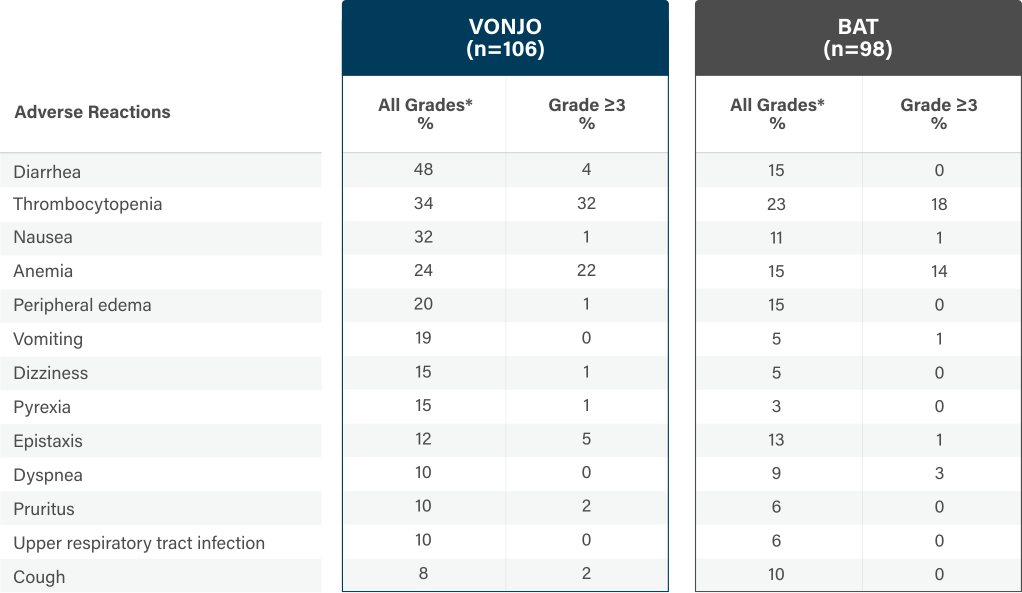
Adverse Reactions Reported in ≥10% of Patients With Platelets ≤100 x 109/L Receiving VONJO or BAT1
Image
Image
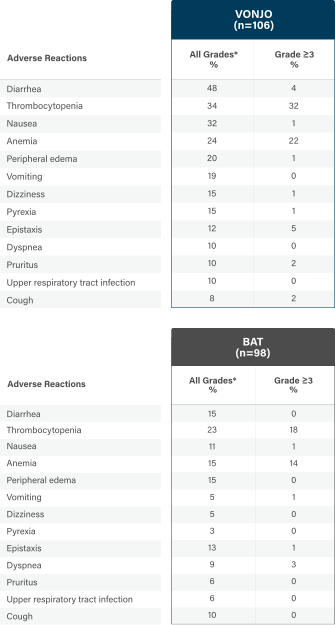
- *Grade by CTCAE Version 4.03.
Incidence of diarrhea1
Most cases of diarrhea with VONJO were low grade and rarely led to treatment interruption (3%).1,2
- VONJO caused diarrhea in ~48% of patients vs 15% of patients treated with BAT
- Of the 48% that experienced diarrhea (any grade), most were Grade 1 (29%) and Grade 2 (15%)1,3
- Most cases (41%) occured in the first 8 weeks
- Diarrhea decreased over time with most cases (41%) occurring in the first 8 weeks, 15% in Weeks 8-16, and 8% in Weeks 16-24
- Median time to resolution of diarrhea was 2 weeks
- Serious diarrhea occurred in 2% of patients treated with VONJO vs no such adverse reactions with BAT
- In postmarketing reports, severe diarrhea leading to acute kidney injury and treatment discontinuation has been reported with VONJO
Management of diarrhea1
- Control preexisting diarrhea before starting VONJO
- In patients with Grade 3 or 4 diarrhea:
- Hold VONJO until it resolves to Grade ≤1 or baseline, and restart VONJO at the last given dose
- Intensify antidiarrheal regimen and provide fluid replacement
- For recurrent diarrhea, hold VONJO until the diarrhea resolves to Grade ≤1 or baseline, and restart VONJO at 50% of the last given dose once the toxicity has resolved
- Concomitant antidiarrheal treatment is required for patients restarting VONJO
Getting started on VONJO
Starting dose
- The recommended dose of VONJO is 200 mg BID1
- The majority of patients in PERSIST-2 were able to start and stay on 200 mg BID, the full VONJO dose1
- Average daily dose was 380 mg (95% mean relative dose intensity)
- Median daily dose was 400 mg (100% median relative dose intensity)
- Dosage reductions due to an adverse reaction occurred in 12% of patients on VONJO 200 mg BID (vs 7% of patients treated with BAT)
Transitioning patients from other JAK inhibitors
- The optimal transition strategy should be individualized to the patient, their current treatment, and disease-specific factors
- Before transitioning from another JAK inhibitor, taper or discontinue treatment according to the manufacturer’s Prescribing Information prior to starting VONJO1
- In PERSIST-2, VONJO was initiated within 1 week after discontinuing previous MF therapy4
Proactive management of diarrhea
- Upon initiation, prescribe an antidiarrheal medication (e.g., loperamide) and instruct the patient to treat diarrhea promptly at the first onset of symptoms (change in frequency or consistency of bowel movements). Interrupt or reduce VONJO dose in patients with significant diarrhea despite optimal supportive care, including fluid replacement1
- Most cases of diarrhea in PERSIST-2 with VONJO were low grade, rarely led to treatment interruption (3%), and typically resolved in 2 weeks1,2
Time to response
- Each patient may respond differently to VONJO
- PERSIST-2 measured the coprimary endpoints (≥35% SVR and ≥50% TSS reduction) over the course of 24 weeks1,2
- BID=twice daily; CTCAE=Common Terminology Criteria for Adverse Events; MOA=mechanism of action; NCCN=National Comprehensive Cancer Network® (NCCN®); plt=platelet counts; QT=time for ventricular activity; RBC=red blood cell.
- References: 1. VONJO. Prescribing information. Sobi, Inc.; 2026. 2. Mascarenhas J, et al. JAMA Oncol. 2018;4(5):652-659. 3. Mascarenhas J, et al. JAMA Oncol. 2018;4(5) (suppl). Accessed October 13, 2025. https://pmc.ncbi.nlm.nih.gov/articles/instance/5885169/bin/jamaoncol-e175818-s001.pdf 4. Data on File. Sobi, Inc. 2023.
Image

How can we help?
If you're looking to stay up to date on the latest news or would like to request a representative or field reimbursement manager, you can do it all in one place—in almost no time.